
A messaging security agent changes bringing AI-powered, real-time threat detection and autonomous protection to every conversation, every link, and every transaction that passes through your messaging apps. In this article, you will learn exactly what a messaging security agent is, how it works, what threats it protects against, and why in 2026 it has become one of the most essential tools for anyone communicating, transacting, or building in the digital world.
What Is a Messaging Security Agent?
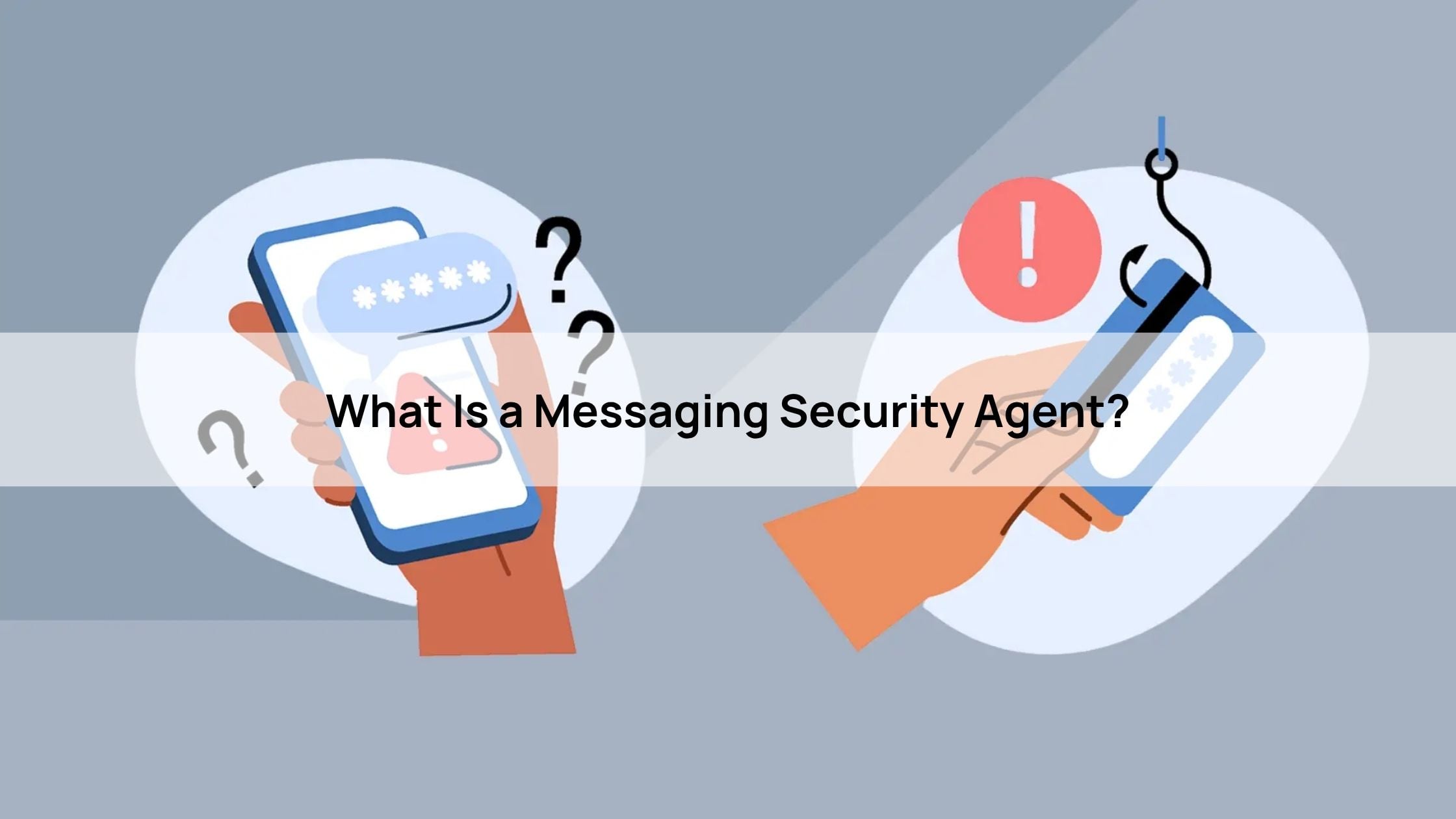
A messaging security agent is an AI-powered system that protects your digital communications in real time detecting, neutralizing, and responding to threats across every messaging platform before they ever reach you.
Key Features of a Messaging Security Agent
Real-time threat detection
Not hours or days later when the damage is already done. By continuously monitoring every incoming message, link, and attachment as it arrives, a messaging security agent ensures that no threat ever reaches you undetected regardless of how sophisticated or rapidly evolving it may be.
Phishing and scam prevention
Before they ever have the chance to deceive or compromise you. Using advanced AI pattern recognition and behavioral analysis, the agent identifies phishing attempts, impersonation scams, and malicious content with a level of accuracy and speed that no manual review or basic spam filter could match.
End-to-end encryption validation
By continuously verifying that encryption protocols are active, uncompromised, and functioning as intended, the agent guarantees that your communications remain private, tamper-proof, and protected from interception at every point in their journey from sender to recipient.
Identity verification
By cross-referencing sender credentials, behavioral patterns, and cryptographic signatures, the agent detects impersonation attempts, account takeovers, and fraudulent identities, ensuring you never unknowingly interact with a bad actor posing as a trusted contact.
Automated threat response
Blocking malicious senders, quarantining dangerous content, and alerting you to threats without requiring any manual intervention on your part.
Privacy protection
Operating with zero data logging, no behavioral tracking, and no sharing of your communication data with third parties. Every message it monitors stays private, every threat it detects stays confidential, and your security is maintained without ever compromising the privacy it was built to protect.
Cross-platform coverage
Whether you communicate on WhatsApp, Telegram, Signal, Discord, or any Web3 messaging platform. Instead of managing separate security tools for each app, a messaging security agent delivers consistent, comprehensive protection across your entire digital communication ecosystem in one seamless experience.
Step-by-Step: How to Set Up a Messaging Security Agent
Step 1 – Assess your current messaging security posture
Identify every messaging platform you use, what sensitive information flows through them, and where your current security gaps exist. Knowing your exposure before you act ensures you select and configure the right protection for your current threat landscape.
Step 2 – Choose the right messaging security agent for your needs
Evaluate options based on platform compatibility, AI capability, privacy standards, and Web3 support if you operate in the crypto ecosystem. Prioritize agents that offer proactive, agentic protection over legacy tools that only react after a threat has already caused damage.
Step 3 – Install and configure across all messaging platforms
A single unprotected messaging channel is all a bad actor needs to compromise your entire digital communication ecosystem.
Step 4 – Define threat response rules and alert preferences
Customizing response rules ensures the agent acts in alignment with your risk tolerance and communication workflow.

Step 5 – Train the AI agent on your communication patterns
The more context you provide early, the more accurately and confidently the agent protects you over time.
Step 6 – Monitor and review security reports regularly
Schedule consistent reviews of your agent’s security reports to stay informed about threat trends, blocked attacks, and patterns that may require updates to your protection rules. Regular monitoring ensures your security posture evolves as fast as the threats targeting you.
Step 7 – Update and optimize as new threats emerge
Messaging threats evolve constantly and your security agent must evolve with them. Regularly update threat intelligence, review new protection features, and optimize your configuration. Stay ahead of the increasingly sophisticated attacks targeting digital communication in 2026.
Who Needs a Messaging Security Agent?
Individual users
Phishing scams, impersonation attacks, and malicious links targeting ordinary messaging app users have never been more prevalent, making AI-powered protection no longer a luxury reserved for enterprises, but an essential layer of personal digital safety for everyone.
Web3 and crypto users
Wallet draining schemes, fake airdrop scams, and impersonation attacks targeting crypto assets are rampant across every major messaging platform, and a messaging security agent purpose-built for Web3 is the most effective defense between your digital assets and bad actors hunting for them.
Business professionals
A messaging security agent protects confidential client data, financial information, and proprietary business conversations from interception, impersonation, and social engineering attacks that traditional corporate security tools are increasingly unable to detect or prevent.
Remote and distributed teams
A messaging security agent ensures that every team member, regardless of location or device, operates within a consistently protected communication environment that scales seamlessly across the entire distributed workforce.
Enterprises
A messaging security agent purpose-built for enterprise deployment provides unified threat visibility, policy enforcement, and automated incident response, giving security teams the control and confidence they need to protect organizational communications without creating friction for the people using them.
Developers and builders
A messaging security agent protects the sensitive conversations, API credentials, and collaborative workflows that underpin decentralized development, ensuring that the communications powering the next internet are as secure as the technology being built within them.
The Future of Messaging Security Agents
Where messaging security technology is headed in 2027 and beyond
The next generation of messaging security agents will not just detect and neutralize threats in real time, they will anticipate and prevent them before they are even initiated, leveraging vast threat intelligence networks and predictive AI models that stay perpetually ahead of the evolving attack landscape.
The role of agentic AI in next-generation communication protection
Moving beyond rule-based detection into systems that reason, adapt, and respond to threats with the same intelligence and autonomy that attackers are increasingly deploying against users.
How messaging security will integrate with agentic browsers like Herond
Creating a unified protection layer that secures communications, transactions, and Web3 interactions within a single intelligent platform. As the browser becomes the primary interface for digital life, embedding messaging security directly into the agentic browsing experience will ensure that users are protected across every channel, every platform, and every interaction without switching between separate security tools.
Predictions for fully autonomous messaging security in the decentralized web
With AI agents handling threat detection, incident response, and security optimization entirely without human intervention. In a Web3 world where users own their data, their assets, and their identity, fully autonomous messaging security will be the essential guardian ensuring that ownership is never compromised by the threats that target it.
Why proactive, AI-driven security will replace reactive tools entirely
As threats grow faster, more sophisticated, and more targeted than any signature-based or rule-driven system can handle, the market will consolidate rapidly around AI-native security agents that prevent attacks before they happen, making the legacy tools of today as obsolete as the dial-up modem in the age of fiber internet.
Conclusion
A messaging security agent delivers what legacy tools cannot: proactive, AI-powered protection that detects, neutralizes, and responds to threats in real time across every platform you use. The future of communication safety is agentic and autonomous, and with the right messaging security agent, so is yours.
About Herond
Herond Browser is a cutting-edge Web 3.0 browser designed to prioritize user privacy and security. By blocking intrusive ads, harmful trackers, and profiling cookies, Herond creates a safer and faster browsing experience while minimizing data consumption.
To enhance user control over their digital presence, Herond offers two essential tools:
- Herond Shield: A robust adblocker and privacy protection suite.
- Herond Wallet: A secure, multi-chain, non-custodial social wallet.
As a pioneering Web 2.5 solution, Herond is paving the way for mass Web 3.0 adoption by providing a seamless transition for users while upholding the core principles of decentralization and user ownership.
Have any questions or suggestions? Contact us:
- On Telegram https://t.me/herond_browser
- DM our official X @HerondBrowser
- Technical support topic on https://community.herond.org