


Commerce is going autonomous and the infrastructure powering that transformation has a name: Agentic Commerce Protocol (ACP). But as AI agents grow more capable of reasoning, planning, and acting independently across the web, that assumption is breaking down fast. The traditional commerce infrastructure, built for checkout forms, credit card approvals, and human decision-making. It was never designed for a world where machines buy, sell, and trade on behalf of users at machine speed. ACP changes everything, providing the open, programmable, and trustless commerce layer. In this guide, you will learn exactly what ACP is, how it works, why it is gaining serious momentum in 2026. And why it may be the most important commerce infrastructure the internet has ever seen.
What Is Agentic Commerce Protocol (ACP)?
Agentic Commerce Protocol (ACP) is an open, programmable commerce standard built specifically for the agentic web, enabling AI agents to discover, negotiate, and transact autonomously without human intervention at every step. Unlike traditional payment protocols that simply move money between parties, ACP handles the full commerce lifecycle, from intent and discovery through negotiation, fulfillment, and settlement in a single, unified, machine-readable standard.
How Does ACP Work?
Core technical architecture of Agentic Commerce Protocol
Agent-to-agent communication layer
This is the foundation that allows AI agents to find, connect, and communicate with each other across the web. It establishes a shared language and protocol that any AI agent, regardless of its underlying framework or platform. It can use to initiate and participate in commerce interactions.
Commerce request and response framework
It defines exactly how AI agents express commercial intent and how other agents respond to it. Like HTTP requests and responses for the web, this framework gives every ACP transaction a structured, machine-readable format that ensures clarity, consistency, and compatibility.
Trust and verification mechanisms
It ensures that every party in an ACP transaction is who they claim to be and that every commitment made is cryptographically guaranteed. These mechanisms replace the need for centralized trust authorities, using decentralized verification to make every agent-to-agent commerce interaction provably secure and tamper-proof.
Settlement and fulfillment layer
This is where ACP transactions are finalized, value is transferred, services are delivered, and the commerce cycle is closed. We build blockchain infrastructure and stablecoin settlement, this layer ensures that every ACP transaction can completed instantly, transparently.
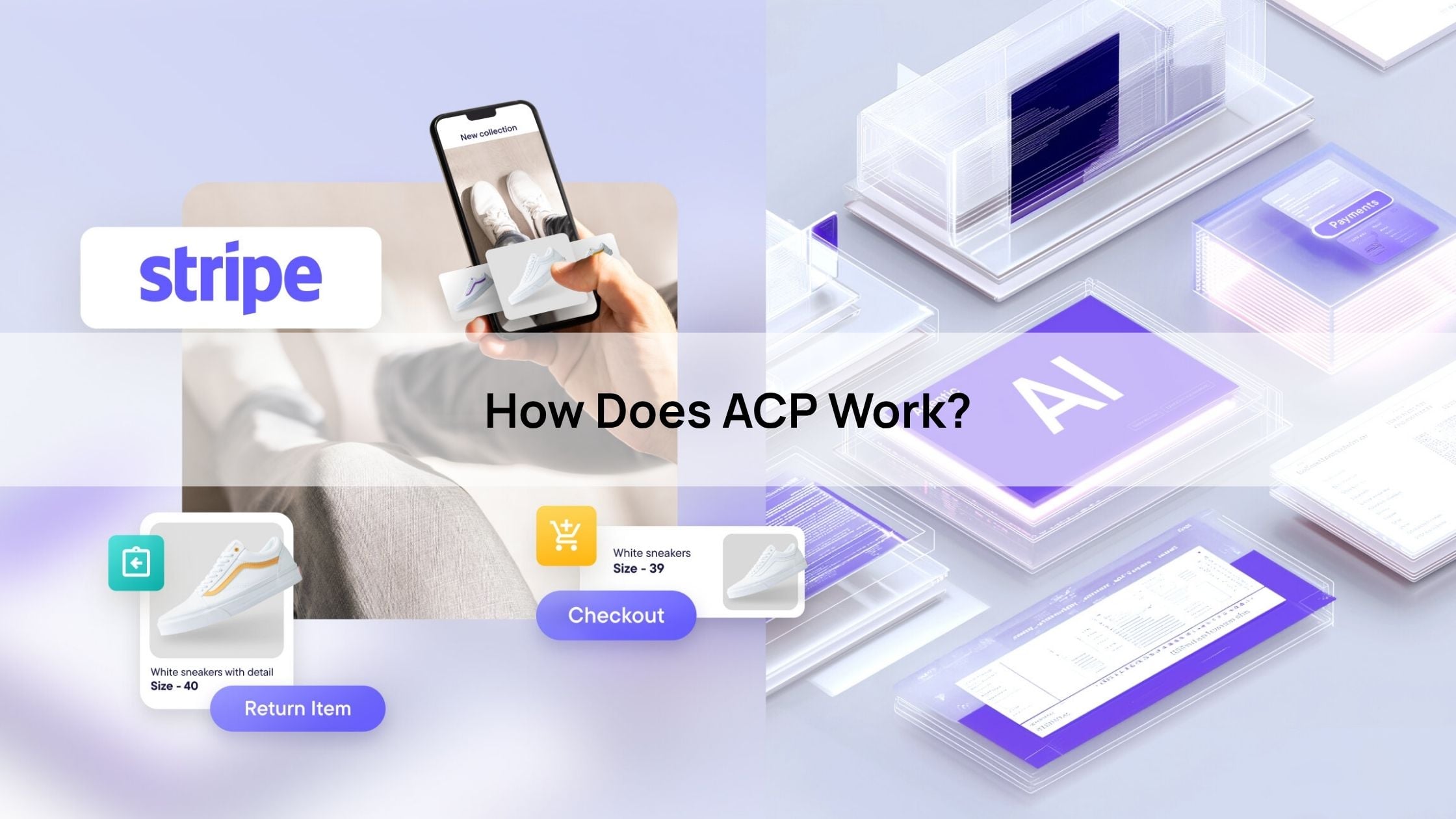
Step-by-step: how to initiate and complete an ACP transaction
Step 1 – Intent & Discovery
The user or AI agent defines a commerce goal and broadcasts a request across the ACP network, instantly discovering available agents, services, or products that match the defined intent.
Step 2 – Negotiation & Agreement
Matched agents communicate directly through the ACP commerce framework, exchanging terms, pricing, and conditions autonomously until a mutually acceptable agreement is reached.
Step 3 – Verification & Commitment
Both parties are cryptographically verified through ACP’s trust mechanisms, and the agreed terms are locked into a smart contract, creating an immutable, trustless record that neither party can alter or dispute.
Step 4 – Settlement & Fulfillment
Payment is executed instantly via stablecoin through the ACP settlement layer, and the agreed service, data, or digital asset is delivered to the requesting agent, completing the entire commerce cycle end to end.
Step 5 – Confirmation
Both parties receive cryptographic confirmation of the completed transaction, recorded on-chain for full transparency, auditability, and proof of fulfillment.
How AI agents use ACP to conduct commerce autonomously
AI agents are the native users of ACP and ACP is the native commerce layer for AI agents. When assigned a goal requiring a commercial transaction, an AI agent uses ACP to handle the entire workflow autonomously, broadcasting intent, discovering counterparties, negotiating terms, verifying identities, and settling payment in a single uninterrupted flow with no human input required at any stage.
The role of smart contracts in ACP transactions
Smart contracts are the enforcement layer that makes ACP transactions truly trustless and tamper-proof. When two AI agents reach a commerce agreement through ACP, the terms immediately lock into a smart contract on the blockchain, automating fulfillment conditions, holding funds in escrow, and releasing payment. Neither party needs to trust the other, only the code, which executes exactly as written every single time. For AI agents transacting at machine speed across the agentic web, smart contracts eliminate fraud, default, and dispute.
ACP and the Agentic Economy
What is the agentic economy and why commerce is its backbone
A fully autonomous economic system where AI agents act, decide, and transact on behalf of users across the web. Commerce is its backbone, because without a reliable, programmable way to exchange value, even the most intelligent AI agent cannot complete the real-world tasks it was built to perform.
How ACP enables AI agents to buy, sell, and trade autonomously
Providing the universal commerce language, they need to interact with any service, platform, or counterparty across the agentic web. From purchasing API access and procuring data feeds to executing complex multi-step commercial workflows, ACP gives every AI agent the ability to conduct commerce as fluidly and independently as it reasons and acts.
The machine economy: when AI agents conduct commerce with each other
Buying, selling, and trading services, data, and digital assets at a speed and scale no human-operated system could match. ACP is the protocol that makes this machine-to-machine economy possible, providing the shared commerce standard. That allows any two agents to transact instantly, trustlessly, and without a human intermediary in the loop.
Why ACP is the essential infrastructure for the agentic economy
For the same reason HTTP is essential to the traditional web, without it, nothing connects, nothing transacts, and nothing functions at scale. Every AI agent, every autonomous workflow, and every decentralized application that needs to exchange value depends on ACP as the foundational commerce layer that makes the agentic economy not just possible, but inevitable.
The scale of the agentic economy by 2026 and beyond
By 2026, billions of autonomous AI agent transactions are being processed daily across the web, a number that is projected to grow exponentially as agentic AI adoption accelerates. ACP infrastructure matures, and the machine economy expands into every corner of digital commerce and beyond.
ACP and Web3: A Natural Partnership
How ACP integrates with blockchain and decentralized infrastructure
Leveraging on-chain settlement, smart contract enforcement, and decentralized identity verification as its core operating layer. This means every ACP transaction inherits the transparency, immutability, and trustlessness of blockchain without requiring any centralized intermediary to validate, process, or approve the outcome.
The role of smart contracts in ACP commerce workflows
To lock with agreed terms on-chain, automating fulfillment conditions, and releasing payment the instant obligations met.

ACP as the commerce backbone of the decentralized web
The universal standard connects decentralized applications, Web3 services, and AI agents into one seamlessly functioning autonomous economy.
How AI browsers like Herond leverage ACP for seamless Web3 commerce
Enabling autonomous transactions, service purchases, and digital asset exchanges without leaving the browser or navigating complex Web3 workflows. By integrating ACP natively alongside its built-in keyless wallet, Herond makes autonomous Web3 commerce as simple and accessible as everyday browsing.
The convergence of ACP and x402 in the agentic web ecosystem
ACP handles the full commerce lifecycle from discovery and negotiation through fulfillment, while x402 powers instant HTTP-native micropayments that fuel every transaction along the way. Together they form the commercial and financial foundation on which they built the entire agentic web.
The Future of ACP
Where Agentic Commerce Protocol headed in 2027 and beyond
As agentic AI matures, developer tooling improves, and enterprise demand for autonomous commerce infrastructure grows. ACP is transitioning from an emerging standard to a foundational layer that every serious Web3 and AI application will be expected to support natively.
ACP as the universal commerce standard for the agentic web
Instead of commerce flowing through intermediaries that extract fees, impose restrictions, and own the transaction data, ACP enables direct, transparent, and programmable value exchange, giving users true ownership of their commercial activity and the data it generates.
The role of ACP in shaping the machine economy
As AI agents multiply across every industry and use cases, the volume of machine-to-machine commerce will dwarf human-initiated transactions, and ACP will be the protocol quietly powering every one of those exchanges, from micropayments for API calls to complex multi-agent procurement workflows worth millions.
How ACP will redefine digital commerce and ownership
Instead of commerce flowing through intermediaries that extract fees, impose restrictions, and own the transaction data, ACP enables direct, transparent, and programmable value exchange, giving users true ownership of their commercial activity and the data it generates.
Predictions for ACP adoption and ecosystem growth by 2030
Embedded in AI browsers, decentralized applications, enterprise automation platforms, and consumer AI agents worldwide. The ecosystem growing around ACP today: developers, protocols, platforms, and investors, is laying the foundation for a machine economy that will be as transformative to commerce as the internet itself was to communication.
Conclusion
From enabling AI agents to discover, negotiate, and transact autonomously, to powering the machine economy at a scale and speed that traditional commerce infrastructure could never support, ACP represents the missing layer that the agentic web has always needed. The autonomous commerce revolution is not approaching, it is already underway.
About Herond
Herond Browser is a cutting-edge Web 3.0 browser designed to prioritize user privacy and security. By blocking intrusive ads, harmful trackers, and profiling cookies, Herond creates a safer and faster browsing experience while minimizing data consumption.
To enhance user control over their digital presence, Herond offers two essential tools:
- Herond Shield: A robust adblocker and privacy protection suite.
- Herond Wallet: A secure, multi-chain, non-custodial social wallet.
As a pioneering Web 2.5 solution, Herond is paving the way for mass Web 3.0 adoption by providing a seamless transition for users while upholding the core principles of decentralization and user ownership.
Have any questions or suggestions? Contact us:
- On Telegram https://t.me/herond_browser
- DM our official X @HerondBrowser
- Technical support topic on https://community.herond.org