
The internet has evolved from a static library where we simply “Read” (Web1) to a social plaza where we “Read-Write” (Web2), but 2026 marks the definitive arrival of the “Read-Write-Execute” era (Web3). This efficiency gap is why a native Web3 browser is no longer a luxury; it’s an essential executive assistant that doesn’t just show you the web, but actively executes on your behalf, bridging the gap between a thought and a finished on-chain transaction.
Beyond Extensions: The Case for Native Architecture
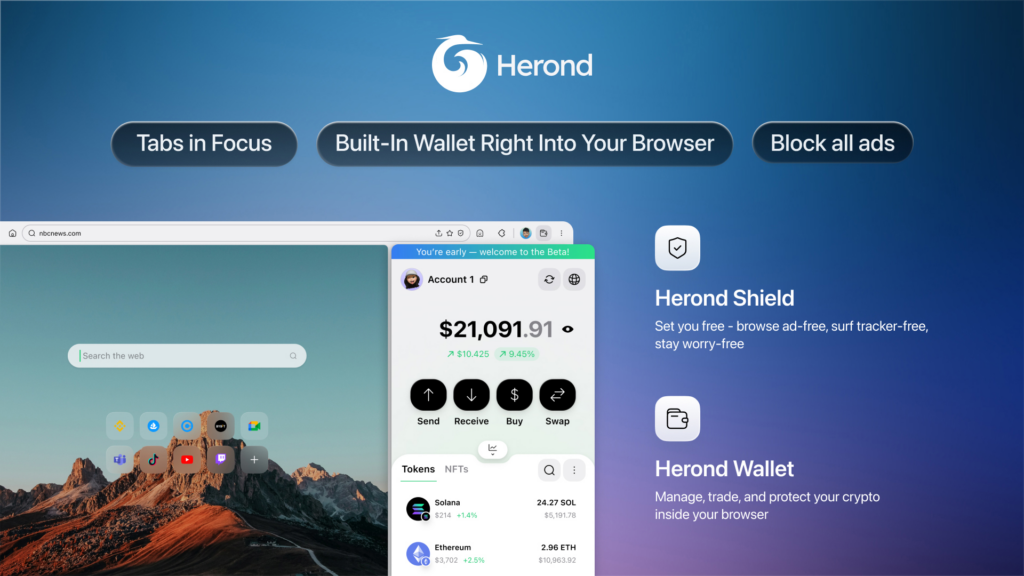
- Closing the “Extension Gap”: In 2026, third-party wallet extensions are prime targets for AI-driven phishing. These “bolted-on” tools create a vulnerable handshake between your browser and your assets; native integration removes this middleman, protecting your private keys within the browser’s hardened core.
- The “Agentic” Advantage (Level 3 Intelligence): We’ve moved beyond basic AI assistants. Native Web3 browsers like Herond utilize the Agentic Commerce Protocol (ACP) to reach “Level 3” intelligence. This means the browser doesn’t just find a link; it interprets your goal, like “optimize my yield” and executes the multi-step transaction autonomously.
- Eliminating Handshake Latency: Standard browsers suffer from “dApp lag” as they struggle to communicate with blockchain nodes through external plugins. Native integration allows for near-zero latency, enabling instant transaction signatures and real-time data syncing that feels as fast as a local app.
- Proactive Threat Neutralization: By utilizing a native security layer like Herond Shield, the browser can intercept malicious smart contract calls before you even see them. It acts as a real-time firewall for your AI agents, ensuring every automated action is verified and safe.
Feature Spotlight: The “Search-to-Action” Pipeline
- Parallel Research Synthesis: Stop the “infinite tab” cycle. Native Web3 browsers use parallel processing to scan dozens of sources simultaneously, delivering a single, synthesized brief instead of making you click through twenty separate tabs.
- Seamless On-Chain Execution: Go from “I want this” to “I own this” in seconds. By bridging the gap between discovery and the native wallet, you can finalize transactions like minting an NFT or swapping tokens, the moment you find them, without switching apps or copying addresses.

- AI-Powered Route Optimization: Don’t overpay for being fast. The internal AI agent acts as a built-in “financial navigator,” automatically scanning decentralized exchanges and protocols to find the highest liquidity and lowest gas fees for every move you make.
- Intelligent Goal Mapping: Simply state your objective, such as “rebalance my portfolio for stability”. And let the browser map out and execute the necessary steps across multiple dApps, turning a 30-minute manual chore into a one-click outcome.
Protecting Your Flow: Focus & Safety in 2026
- Herond Shield (The Agentic Firewall): Think of this as a dedicated bodyguard for your digital assistants. As AI agents handle tasks on your behalf, Herond Shield runs real-time background checks, ensuring they only interact with verified, secure smart contracts and blocking malicious exploits before they trigger.
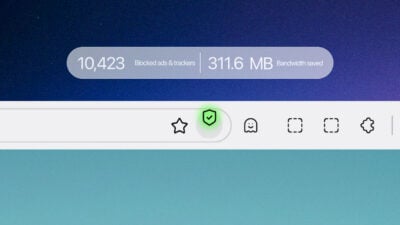
- Focus Protection (Zero Distractions): Clean up your digital workspace. By automatically neutralizing intrusive ads, pop-ups, and trackers at the browser level, it prevents data harvesting while protecting your mental bandwidth so you can stay in the zone.
- Safe Autonomy (Secure Delegation): Offload boring stuff without losing sleep. You can safely delegate repetitive, manual on-chain tasks to background agents, knowing the browser’s hardened native architecture won’t let them overstep their permissions or expose your private keys.
Comparison: Native Web3 Browser vs. The 2026 Field
| Feature | Native Web3 (Herond) | Legacy AI (Perplexity) | Standard Privacy (Brave) |
| Execution | Agent-First: Executes on-chain. | Research-First: Answers only. | Privacy-First: Protects only. |
| Workflow | Search-to-Action Pipeline. | Search-to-Reading. | Search-to-Browsing. |
| Protocol | Agentic Commerce (ACP). | Informational LLMs. | Basic Ad-blocking. |
Conclusion: Your Navigator for the On-Chain Economy
The internet has officially moved beyond static pages and endless tabs into an era of instant on-chain execution. Sticking with a legacy browser to navigate the 2026 web is like trying to manage a modern business with a typewriter, it simply can’t keep up with the speed of decentralized apps and AI-driven data. The future of browsing is no longer about passively scrolling through information, it’s about having the automated, secure autonomy to act on it instantly.
About Herond
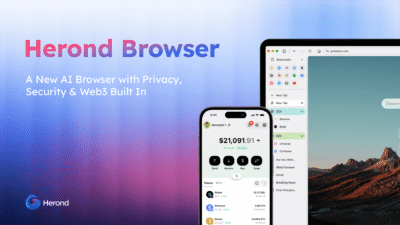
Herond Browser is the new AI browser, prioritizing privacy for a safer, faster, and smarter browsing experience with minimal data use. Built for the Web2-to-Web3 shift, it enables you to access the open web while you own your data, private Web3 assets, and earn true value.
To enhance user control over their compound experience, Herond offers:
- Herond AI: A new agentic browser that leads your workflow.
- Herond Shield: A robust adblocker and privacy protection suite.
- Herond Wallet: A secure, multi-chain, non-custodial social wallet.